Archives
- 2026-07
- 2026-06
- 2026-05
- 2026-04
- 2026-03
- 2026-02
- 2026-01
- 2025-12
- 2025-11
- 2025-10
- 2025-09
- 2025-03
- 2025-02
- 2025-01
- 2024-12
- 2024-11
- 2024-10
- 2024-09
- 2024-08
- 2024-07
- 2024-06
- 2024-05
- 2024-04
- 2024-03
- 2024-02
- 2024-01
- 2023-12
- 2023-11
- 2023-10
- 2023-09
- 2023-08
- 2023-07
- 2023-06
- 2023-05
- 2023-04
- 2023-03
- 2023-02
- 2023-01
- 2022-12
- 2022-11
- 2022-10
- 2022-09
- 2022-08
- 2022-07
- 2022-06
- 2022-05
- 2022-04
- 2022-03
- 2022-02
- 2022-01
- 2021-12
- 2021-11
- 2021-10
- 2021-09
- 2021-08
- 2021-07
- 2021-06
- 2021-05
- 2021-04
- 2021-03
- 2021-02
- 2021-01
- 2020-12
- 2020-11
- 2020-10
- 2020-09
- 2020-08
- 2020-07
- 2020-06
- 2020-05
- 2020-04
- 2020-03
- 2020-02
- 2020-01
- 2019-12
- 2019-11
- 2019-10
- 2019-09
- 2019-08
- 2019-07
- 2019-06
- 2019-05
- 2019-04
- 2018-07
-
The aniline R group was extensively explored and a large
2021-06-02
The aniline R2 group was extensively explored and a large variety of substitution was tolerated at several positions on the aryl ring (). Notably, substitution at the 3-position often gave increased potency. Increasing lipophilic bulk at this position gave increasing potency within an ether series (
-
The three dimensional crystal structure of
2021-06-02
The three-dimensional crystal structure of Ca2+ loaded CaM reveals a dumbbell-shaped molecule with two roughly globular lobes, the N- and C-terminal lobes linked by a long solvent-exposed helix, which has been shown by NMR to be non-helical in its central part and flexible in solution [13]. Each glo
-
A 83-01 synthesis Cells expressing the CDK S D mutant
2021-06-02
Cells expressing the CDK5 S47D mutant exhibit impaired migration and enhanced proliferation: Finally, we wished to determine the functional significance of this phosphoevent. Multiple studies have implicated active CDK5 in promotion of cell migration [9,16,[21], [22], [23], [24]] and in one study t
-
br CXCR The CXC receptor and CXCR and
2021-06-02
CXCR1/2 The CXC receptor 1 and 2 (CXCR1 and CXCR2) have been well characterised in vertebrates. In mammals and birds, the two receptors are shared by the ELR+ CXC ligands, namely the CXCL8 family members that have proinflammatory roles in recruitment of neutrophils, monocytes and macrophages to s
-
A widely accepted mechanism to differentiate hESCs
2021-06-02
A widely accepted mechanism to differentiate hESCs into cardiomyocytes is through perturbation of the canonical Wnt/β-catenin pathway. Initial Wnt activation is required to form the hmg-coa reductase inhibitors [3]. Thereafter, it is believed that inhibition of the canonical Wnt/β-catenin pathway is
-
Located on the fore tarsals of the front pair
2021-06-02
Located on the fore-tarsals of the front pair of legs, the Haller’s organ is presumed central to tick chemosensation. Recent genomic, transcriptomic and proteomic investigations have identified several families of transmembrane proteins in the forelegs of ticks that are likely involved in olfactory
-
Taking all the data together we
2021-06-02
Taking all the data together, we propose the possible mechanism of glyphosate-induce cell proliferation via estrogen receptor signaling (Fig. 10). Glyphosate may bind to ERα followed by an activation step that starts with the phosphorylation of ERα and activation of other signaling proteins by phosp
-
Interestingly global EGFR depletion increased the rate
2021-06-02

Interestingly, global EGFR depletion increased the rate of cell elimination everywhere in the notum (Figures 2B–2D), irrespective of the deformation status of the cells. Accordingly, we found that SMI-4a australia are not any more sensitive to stretching upon EGFR depletion (Figures S6A–S6C; Video
-
Compound was prepared from chloroindole by acylation to give
2021-06-02

Compound was prepared from 6-chloroindole () () by acylation, to give , and subsequent reduction to give . The thiazole was then installed using conditions developed by Buchwald and co-workers to give . Hydrolysis of the ester yielded the thiazole 1-Azakenpaullone sale derivative (). Derivatives
-
PGE exerts its functions by binding
2021-06-02
PGE2 exerts its functions by binding to different receptors. Four different subtypes of PGE2 receptors are found in mammals and are designated as EP1-4. These are G-protein coupled receptors that belong to a family of seven rhodopsin-like transmembrane spanning receptors. They are structurally diffe
-
Future advances in the in vivo molecular imaging of
2021-06-02
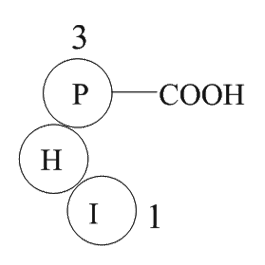
Future advances in the in vivo molecular imaging of enzyme activity will greatly benefit from the progress towards the quantitative detection of enzymes. Quantitative imaging requires knowledge of both the location and concentration of a specific enzyme, which is dependent on the simultaneous measur
-
The generation of ROS in addition to eliciting oxidative
2021-06-01
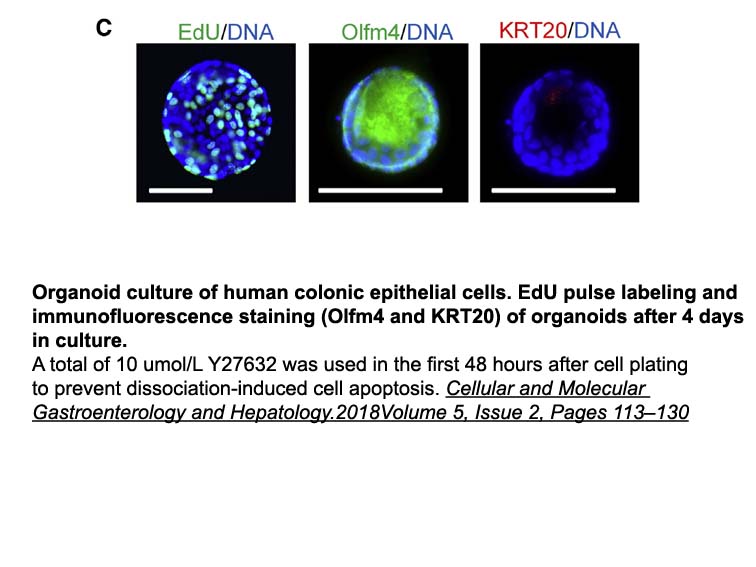
The generation of ROS, in addition to eliciting oxidative stress, is an important proapoptotic signal (Ott et al., 2007). Apoptosis is clearly associated with the production of ROS, since ROS generation occurs in the mitochondrial respiratory chain and disturbs mitochondrial homeostasis, which plays
-
br Results br Discussion Our UbV library was originally
2021-06-01
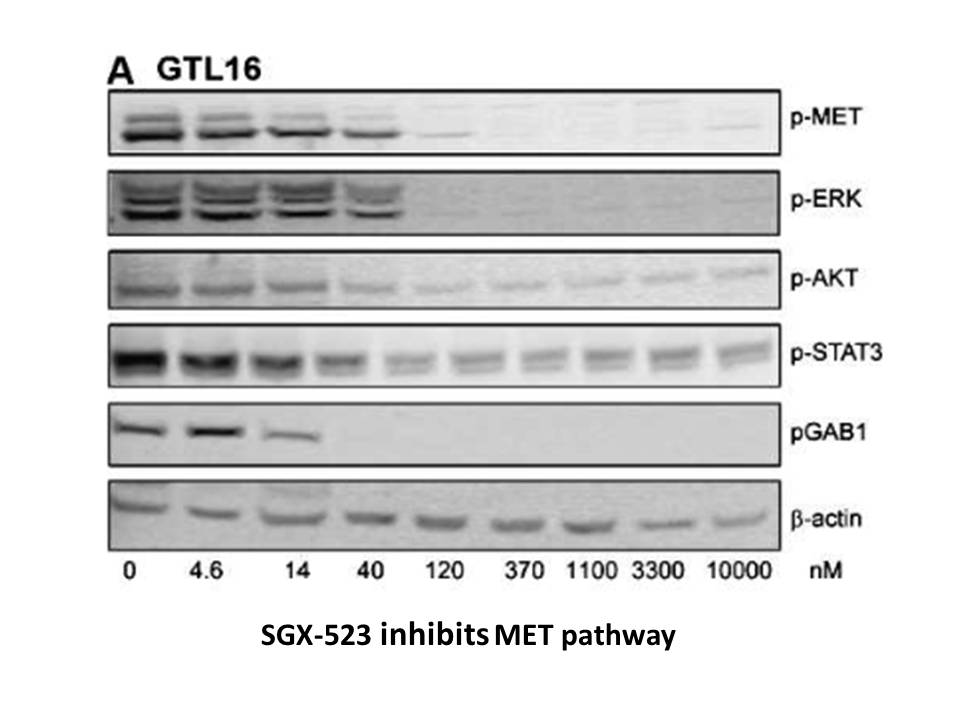
Results Discussion Our UbV library was originally designed to develop inhibitors of deubiquitinases (Ernst et al., 2013). Recently, we showed that UbVs could exhibit multiple binding modes and mechanisms to modulate HECT E3 activity (Zhang et al., 2016)—one set occupied the HECT domain E2-bind
-
Enzymatic assay The usual in vitro test for the measure
2021-06-01

Enzymatic assay. The usual in vitro test for the measure of the activity of DbH involves ascorbate as a cosubstrate (e.g., 5mM) and tyramine as a substrate (e.g., 10mM). When using N-aryl-N′-hydroxyguanidines instead of ascorbate, the hydroxylase activity of DbH was measured by HPLC as the amounts o
-
br Conclusions In Summary a multilayer screening
2021-06-01
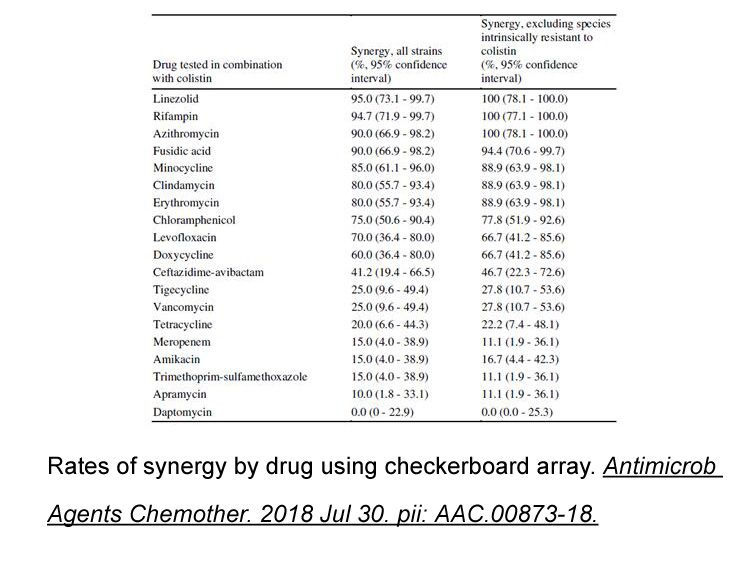
Conclusions In Summary, a multilayer screening of xanthones of natural origin (Xanthone-NPs) was undertaken against Pf-DHFR. The Re-rank score of screened compounds was size normalized and interaction profile was generated using experimentally known inhibitors. Three compounds X5, X113A and X164B
16365 records 687/1091 page Previous Next First page 上5页 686687688689690 下5页 Last page