Archives
- 2026-09
- 2026-08
- 2026-07
- 2026-06
- 2026-05
- 2026-04
- 2026-03
- 2026-02
- 2026-01
- 2025-12
- 2025-11
- 2025-10
- 2025-09
- 2025-03
- 2025-02
- 2025-01
- 2024-12
- 2024-11
- 2024-10
- 2024-09
- 2024-08
- 2024-07
- 2024-06
- 2024-05
- 2024-04
- 2024-03
- 2024-02
- 2024-01
- 2023-12
- 2023-11
- 2023-10
- 2023-09
- 2023-08
- 2023-07
- 2023-06
- 2023-05
- 2023-04
- 2023-03
- 2023-02
- 2023-01
- 2022-12
- 2022-11
- 2022-10
- 2022-09
- 2022-08
- 2022-07
- 2022-06
- 2022-05
- 2022-04
- 2022-03
- 2022-02
- 2022-01
-
Mass spectrometry Matrix assisted laser desorption ionizatio
2024-10-01
Mass spectrometry. Matrix-assisted laser desorption/ionization time-of-flight (MALDI-TOF) MS experiment was performed in linear and positive-ion mode on a DE-STR instrument equipped with a nitrogen laser (PE Biosystems, Foster City, CA). Each spectrum was calibrated in the default mode in which 0.1%
-
The first identified auxiliary subunit
2024-10-01
The first identified auxiliary subunit, stargazin, is essential for AMPAR function in cerebellar granule neurons (Hashimoto et al., 1999). Subsequently, a family of six transmembrane AMPAR regulatory proteins (TARPs) were defined that modify channel trafficking, gating, and pharmacology (Kato and Br
-
br A and tau in Alzheimer s disease
2024-10-01
Aβ and tau in Alzheimer's disease The two classical histopathological hallmarks of AD are extracellular insoluble Aβ deposits, known as Aβ plaques, and intracellular accumulations of insoluble microtubule-associated tau protein, known as neurofibrillary tangles [14]. Aβ peptides are produced as a
-
br Introduction Chronic kidney disease CKD is
2024-10-01
Introduction Chronic kidney disease (CKD) is a worldwide public health problem. This problem is even worse in socioeconomically deprived countries because lower income and social deprivation are associated with higher incidence of reduced GFR, progressive kidney function loss and end stage renal
-
Rising depolarization was observed during and decaying depol
2024-09-30

Rising depolarization was observed during and decaying depolarization after the photostimulation (Fig. 1D). The slow decrease of the firing rate after photostimulation is also a remarkable characteristic of the striatal neuron (Figs. 1E, 2 and 3), since the cortex pyramidal neurons (data not shown)
-
In addition we aimed to examine the possible role of
2024-09-30
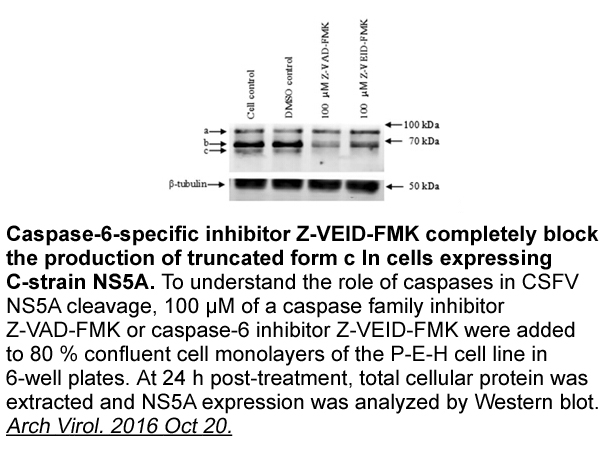
In addition, we aimed to examine the possible role of adiponectin in modulating changes in IR. It was observed that there was a simultaneous decline in expression of IR and AdipoR1 proteins in the ovary of PCOS-mice as compared to the control ovary. Further, a strong correlation was found between ch
-
br There are three types of HT receptors
2024-09-30
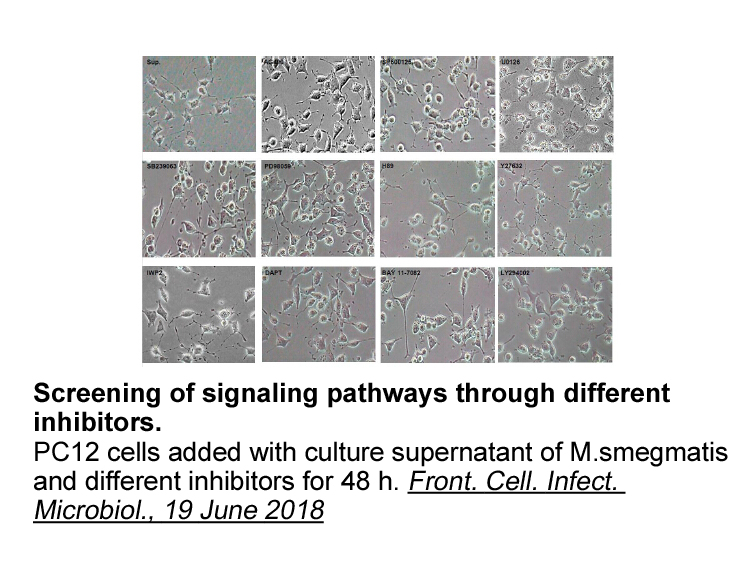
There are three types of 5-HT2 receptors. 5-HT2A, 5-HT2B and 5-HT2C receptors Exhibit 46–50% overall sequence identity and couple preferentially to Gq/11 to increase inositol phosphates and cytosolic [Ca2+] and in agreement with their long known role in muscle contraction and stimulation in the br
-
br Exocytosis of GLUT by
2024-09-30
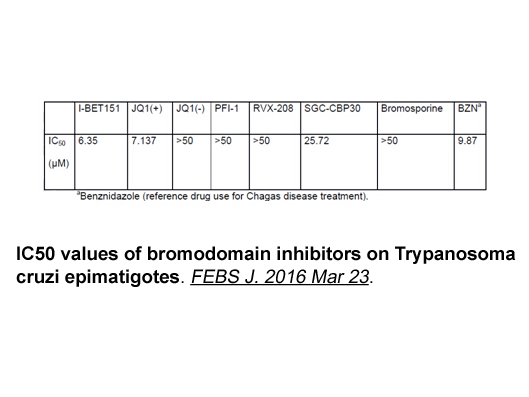
Exocytosis of GLUT4 by autophagy Conclusion Conflict of interest Ethics statement Antigen processing and presentation Adaptive immune response has to be instructed to identify and eliminate specific pathogens or foreign entities defined by their antigenic determinants. Processed antig
-
br Materials and methods br Results br
2024-09-30
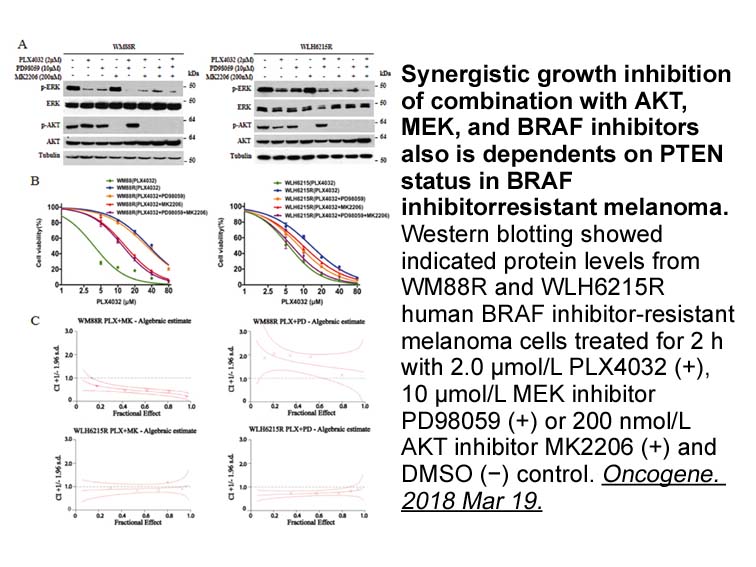
Materials and methods Results Discussion Numerous studies showed that Na+-K+-ATPase activity and membrane Bafilomycin A1 were decreased in cardiac tissue subjected to IR (Belliard et al., 2013; Lee et al., 2013). In return, treatment that alleviated the progress of IR-related myocardial inj
-
ASK has been identified as
2024-09-30
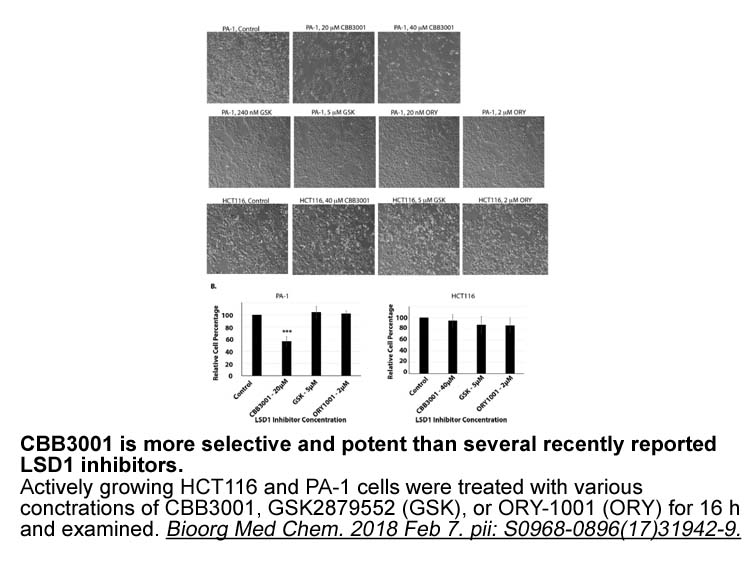
ASK2 has been identified as an ASK1 binding protein (Wang et al., 1998). ASK1 supports the stability and active configuration of ASK2 in the heteromeric complex, while ASK2 has been found to activate ASK1 by direct phosphorylation (Takeda et al., 2007). Unlike ASK1, which is ubiquitously expressed i
-
Currently NSAIDs which achieve antineoplastic actions
2024-09-30
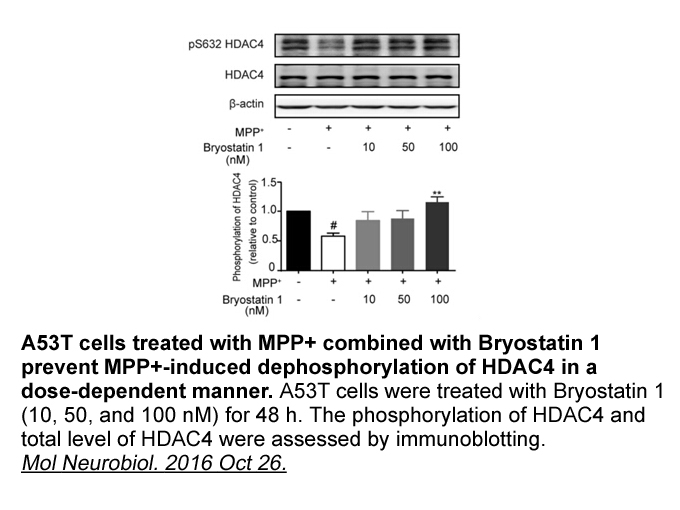
Currently, NSAIDs which achieve antineoplastic actions mainly through apoptosis are emerging choice in chemotherapy. Their antineoplastic effects were demonstrated before in tumor-bearing models [5], [6], [7]. Through in vitro cell models, we identified an indomethacin-activation of ceramide/PP2A/Ak
-
Therefore VEGF and its receptors
2024-09-29
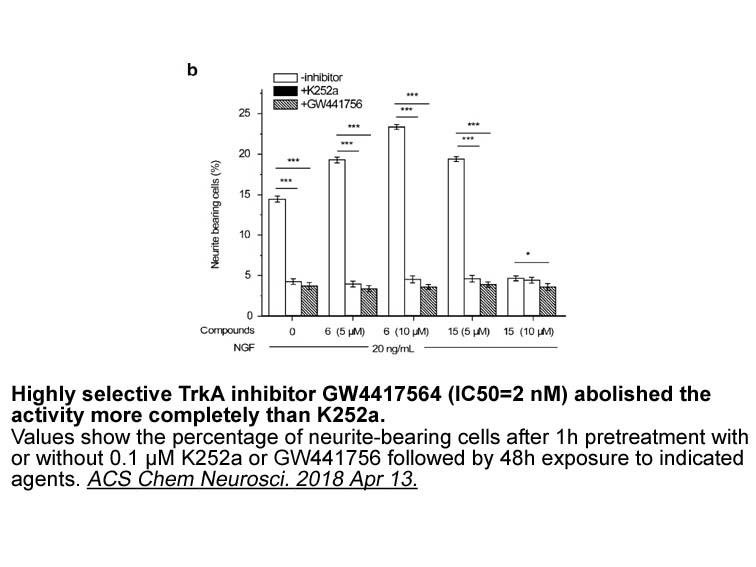
Therefore, VEGF and its receptors are expressed in different organs, including the kidneys, the liver and the Camptothecin synthesis [55]. In the human placenta, VEGF is mainly synthesized by cytotrophoblast and Hofbauer cells early in the first trimester, whereas Flk-1 and Flt-1 receptors are expre
-
AMPK is a cellular energy sensor that is phosphorylated in
2024-09-29
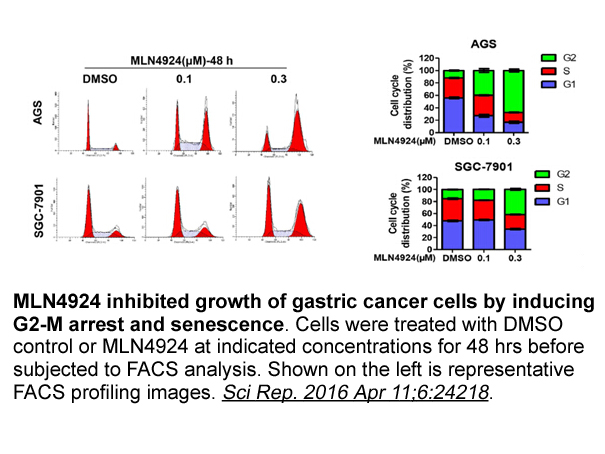
AMPK is a cellular energy sensor that is phosphorylated in response to high intracellular ADP levels to increase GLUT4 translocation into the cell, and subsequently, increase intracellular glucose levels to provide substrate to replenish ATP levels [25]. In metabolic syndrome, sequestration of plasm
-
Electron paramagnetic resonance studies of mixtures of
2024-09-29
Electron paramagnetic resonance studies of mixtures of Aβ1–40 and Aβ1–42 suggest that interlaced fibrils might also form [40] where Aβ1–40 and Aβ1–42 is found within the same fibril. Considering the Aβ fold rather than the sequence, these observations imply two mechanisms that might lower the total
-
LAP locations in the parasite tissues would provide
2024-09-29
LAP locations in the parasite tissues would provide clues for the potential physiological roles of it inside the parasite body. To date, tissue localization of LAPs has been carried out in many helminth parasites; however, information regarding LAPs in tapeworm is scarce. It was shown that LAPs were
8461 records 107/565 page Previous Next First page 上5页 106107108109110 下5页 Last page